What the front delts does
The front head of the deltoid caps the front of the shoulder. It raises the arm forward and helps in every press, which is why it is often trained more than its two neighbours.
15 moves that train it, easiest first
Click a movement for how to set it up, the steps, what to feel for and what usually goes wrong.
Start here: no or light equipment
Pike Push-Up (5 to 20 reps, a variation of Push-Up)
Set up. Start in a push-up position, then walk your feet in and lift your hips high so your body forms an upside-down V.
- Bend your elbows and lower the top of your head toward the floor between your hands.
- Stop just before it touches.
- Push back up to straight arms.
Form cues
- Keep your hips high.
- Move your head forward of your hands slightly.
- Raise your feet on a box to make it harder.
Common mistakes
- Letting the hips drop so it becomes a push-up.
- Flaring the elbows straight out.
Build: dumbbells, kettlebells, cables and machines
Dumbbell Shoulder Press (6 to 15 reps, a variation of Overhead Press)
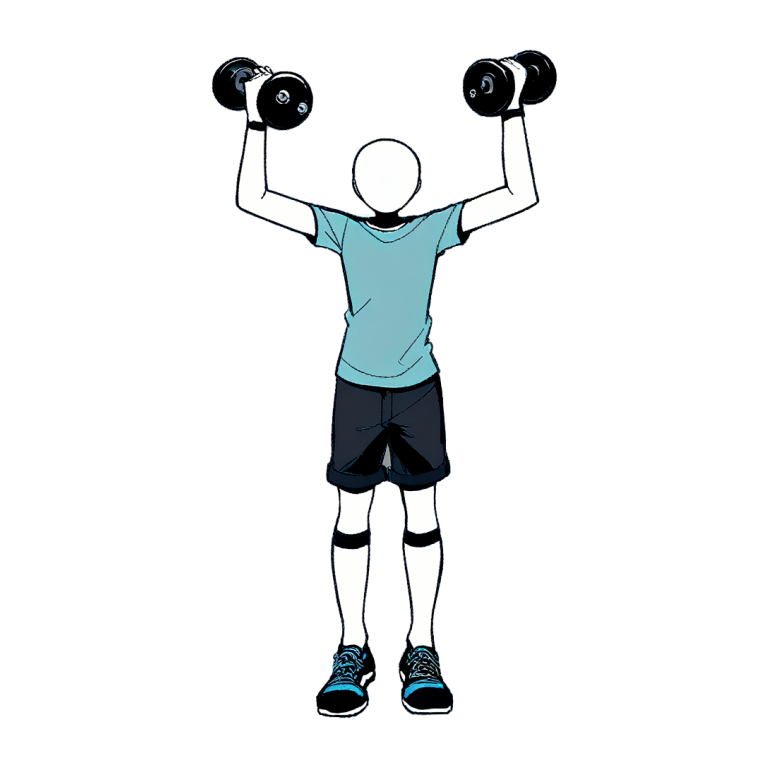
Set up. Sit on a bench with an upright back support, or stand, holding a dumbbell at each shoulder with palms forward.
- Press the dumbbells up until your arms are straight overhead.
- Let them come slightly together at the top.
- Lower under control to shoulder height.
Form cues
- Keep your back against the pad if seated.
- Keep the wrists stacked over the elbows.
- Brace your stomach.
Common mistakes
- Arching the lower back to finish the press.
- Lowering only partway.
Arnold Press (6 to 15 reps, a variation of Dumbbell Shoulder Press)
Set up. Sit on a bench with back support holding two dumbbells in front of your shoulders, palms facing you.
- Press the dumbbells up while turning your palms to face forward.
- Finish with straight arms overhead.
- Lower while turning the palms back toward you.
Form cues
- Make the turn smooth and continuous.
- Keep your back against the pad.
- Control the lowering.
Common mistakes
- Rushing the rotation so the dumbbells wobble.
- Arching the back.
Machine Shoulder Press (8 to 15 reps, a variation of Overhead Press)
Set up. Adjust the seat so the handles start at about shoulder height. Sit with your back against the pad and grip the handles.
- Press the handles up until your arms are almost straight.
- Pause briefly.
- Lower under control to shoulder height.
Form cues
- Keep your back on the pad.
- Keep the shoulders down.
- Use a full range.
Common mistakes
- Setting the seat so low that the start is too deep.
- Arching the back to finish.
Smith Machine Overhead Press (5 to 12 reps, a variation of Overhead Press)
Set up. Place an upright bench under the Smith bar so it lowers just in front of your face. Sit, grip slightly wider than your shoulders and set the safety stops.
- Unhook the bar and press it up to straight arms.
- Lower under control to about chin height.
- Press back up.
- Rotate the bar back onto the hooks after the set.
Form cues
- Keep your back on the pad.
- Keep your wrists over your elbows.
- Brace your stomach.
Common mistakes
- Placing the bench so the bar lands on the head or too far forward.
- Arching the back.
Single-Arm Overhead Press (5 to 12 reps, a variation of Dumbbell Shoulder Press)
Set up. Stand with a dumbbell at one shoulder, palm facing in or forward, and your free hand on your hip or out to the side.
- Brace your stomach and press the dumbbell straight up.
- Finish with the arm straight overhead.
- Lower under control.
- Switch sides after the set.
Form cues
- Do not lean away from the weight.
- Keep your glutes tight.
- Keep the wrist straight.
Common mistakes
- Leaning sideways to finish.
- Arching the back.
Overhead Carry (held for time, a variation of Farmer’s Carry)
Set up. Press a dumbbell overhead in one hand and lock the arm straight, biceps near your ear.
- Brace your stomach and stand tall.
- Walk forward with steady, normal steps.
- Lower the weight under control at the end of the distance or time.
- Switch sides.
Form cues
- Keep the arm locked and vertical.
- Keep the ribs down.
- Walk without leaning.
Common mistakes
- Letting the arm drift forward.
- Arching the lower back.
Front Raise (10 to 20 reps)
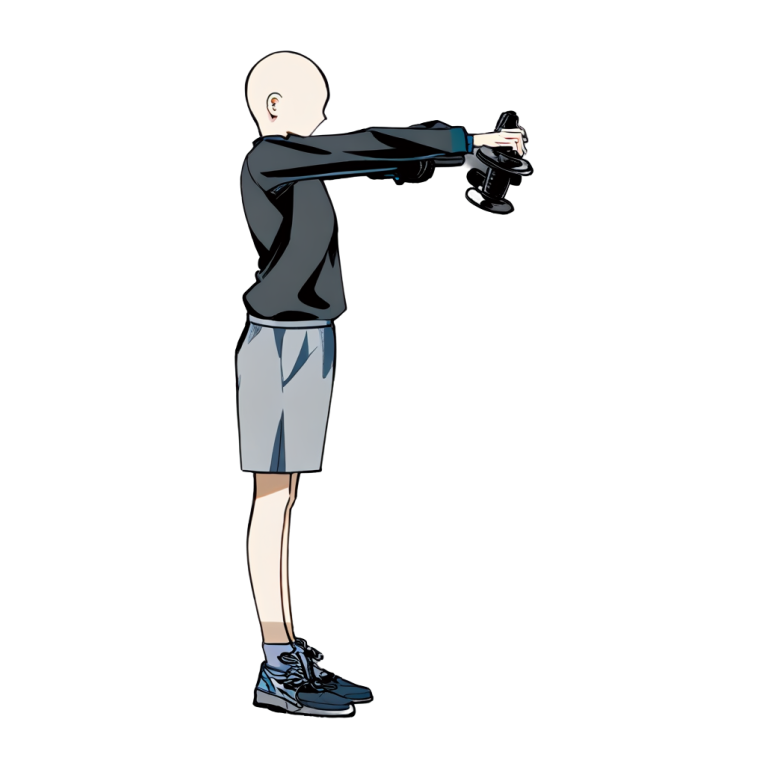
Set up. Stand tall holding a dumbbell in each hand in front of your thighs, palms facing down or in.
- Raise the dumbbells forward with a slight elbow bend.
- Stop at about shoulder height.
- Lower slowly.
Form cues
- Keep the torso still.
- Keep the shoulders down.
- Use a light weight.
Common mistakes
- Leaning back to swing the weights up.
- Raising far above the head.
Cable Front Raise (10 to 20 reps, a variation of Front Raise)
Set up. Set a cable low with a single handle. Stand facing away from the machine with the handle in one hand beside your thigh.
- Raise the arm forward with a slight elbow bend.
- Stop at about shoulder height.
- Lower under control.
- Switch sides after the set.
Form cues
- Brace your stomach.
- Keep the shoulder down.
- Move slowly.
Common mistakes
- Rocking the body.
- Shrugging as the arm rises.
Cable Y-Raise (10 to 20 reps, a variation of Face Pull)
Set up. Set two cables low and cross them, holding each handle in the opposite hand. Stand in the middle with your arms crossed low in front of you.
- Raise your arms up and out into a Y shape above your head.
- Pause at the top.
- Lower under control back to the crossed start.
Form cues
- Keep the arms long with a slight elbow bend.
- Keep the ribs down.
- Lift with the shoulders, not the lower back.
Common mistakes
- Arching the back to reach higher.
- Using too much weight.
Load: the barbell
Overhead Press (3 to 10 reps)
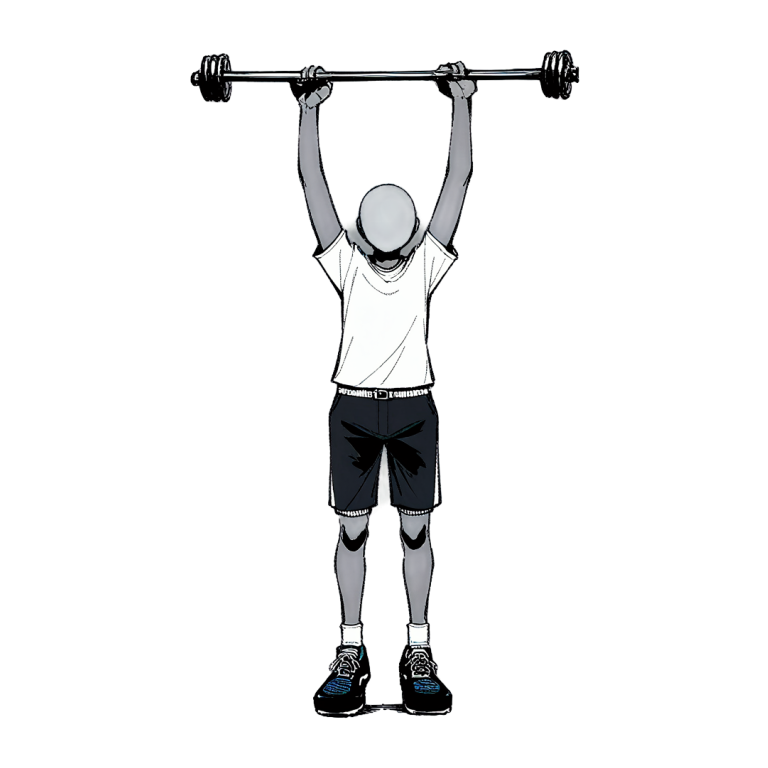
Set up. Stand with the bar on the front of your shoulders, hands just outside shoulder width and feet about hip width apart. Squeeze your glutes and brace your stomach.
- Press the bar straight up, moving your head back slightly to let it pass.
- Bring your head through once the bar passes your forehead.
- Lock out with the bar over the middle of your feet.
- Lower under control to the front of your shoulders.
Form cues
- Keep the ribs down and the glutes tight.
- Press in a straight line.
- Keep your wrists over your elbows.
Common mistakes
- Leaning far back to push the bar up.
- Pressing the bar out in front of the face.
Landmine Press (6 to 15 reps, a variation of Overhead Press)
Set up. Anchor one end of a barbell in a landmine or corner. Stand facing it in a staggered stance holding the free end at your shoulder in one hand.
- Press the bar up and forward until your arm is straight.
- Let your shoulder blade move with the arm at the top.
- Lower under control to the shoulder.
- Switch sides after the set.
Form cues
- Brace your stomach so the torso does not twist.
- Press up and away.
- Keep the elbow slightly in.
Common mistakes
- Leaning back to press.
- Rotating the hips.
Push Press (3 to 8 reps, a variation of Overhead Press)
Set up. Stand with the bar on the front of your shoulders, hands just outside shoulder width and feet hip width apart.
- Dip a short way by bending the knees, keeping the torso upright.
- Drive up through the legs and use that drive to press the bar overhead.
- Lock out with the bar over the middle of your feet.
- Lower under control to the shoulders, bending the knees slightly to absorb it.
Form cues
- Keep the dip short and straight down.
- Drive with the legs, finish with the arms.
- Keep the ribs down.
Common mistakes
- Dipping by pushing the hips back.
- Pressing the bar forward instead of up.
Seated Overhead Press (5 to 12 reps, a variation of Overhead Press)
Set up. Sit on an upright bench in a rack with the bar at about shoulder height. Grip slightly wider than your shoulders.
- Unrack the bar and hold it at the front of your shoulders.
- Press it straight up to straight arms.
- Lower under control to the shoulders.
Form cues
- Keep your back against the pad.
- Move your head back slightly to let the bar pass.
- Keep the wrists stacked.
Common mistakes
- Arching off the pad.
- Pressing the bar forward.
Z-Press (5 to 12 reps, a variation of Overhead Press)
Set up. Sit on the floor with your legs straight out in front in a rack, the bar set at about shoulder height. Grip it slightly wider than your shoulders.
- Unrack the bar to the front of your shoulders, sitting tall.
- Press straight up to straight arms.
- Lower under control.
Form cues
- Sit tall and brace.
- Keep the bar over your hips.
- Use lighter weight than a standing press.
Common mistakes
- Leaning back to press.
- Rounding the lower back.
Also trains it on the way
Barbell Bench Press (3 to 10 reps)
Set up. Lie on a flat bench with your eyes under the bar and your feet flat on the floor. Grip the bar a little wider than shoulder width and squeeze your shoulder blades together and down.
- Lift the bar out of the rack and hold it over your shoulders with straight arms.
- Lower it under control to your lower chest, elbows angled out at roughly forty-five degrees from your body.
- Touch the chest lightly without bouncing.
- Press the bar back up and slightly back until it sits over your shoulders again.
Form cues
- Keep your shoulder blades pinned to the bench.
- Drive your feet into the floor.
- Keep your wrists stacked over your elbows.
Common mistakes
- Bouncing the bar off the chest.
- Flaring the elbows straight out to the sides.
Take care. Use a spotter or set the rack's safety arms just below chest height when you work near your limit.
Incline Barbell Bench Press (5 to 12 reps, a variation of Barbell Bench Press)
Set up. Set the bench to a low incline and lie back with your eyes under the bar. Grip slightly wider than your shoulders and set your shoulder blades back and down.
- Unrack the bar and hold it over your upper chest with straight arms.
- Lower it under control to the top of your chest, just below the collarbones.
- Pause lightly without resting the bar on you.
- Press back up to straight arms over your shoulders.
Form cues
- Keep your upper back tight against the bench.
- Lower to the upper chest, not the throat.
- Keep your forearms vertical.
Common mistakes
- Setting the bench so steep it becomes a shoulder press.
- Lifting the hips off the seat to finish a rep.
Take care. Use a spotter or safety arms when the weight is heavy, since the bar travels over your face and neck.
Dumbbell Bench Press (6 to 15 reps, a variation of Barbell Bench Press)
Set up. Sit on a flat bench with a dumbbell on each thigh, then lie back and bring them up beside your chest. Plant your feet and pull your shoulder blades together.
- Press the dumbbells up until your arms are straight over your shoulders.
- Lower them under control to the sides of your chest, elbows angled slightly in.
- Stop when you feel a stretch across the chest.
- Press back up, letting the dumbbells come a little closer together at the top.
Form cues
- Move both arms at the same speed.
- Keep your wrists straight over your elbows.
- Keep your back set on the bench.
Common mistakes
- Dropping the dumbbells too low and losing control at the bottom.
- Clanking the dumbbells together at the top.
Dip (4 to 15 reps)
Set up. Grip the parallel bars and jump or step up to straight arms, shoulders over your hands. Lean your torso slightly forward.
- Bend your elbows and lower your body under control.
- Go down until your upper arms are about parallel to the floor, or as far as your shoulders are comfortable.
- Press back up to straight arms.
Form cues
- Keep your shoulders down, away from your ears.
- Lean forward a little to bring in more chest.
- Move slowly at the bottom.
Common mistakes
- Dropping too deep and letting the shoulders roll forward.
- Swinging the legs to get up.
Take care. Stop the set if the front of the shoulder hurts at the bottom, and use a shorter range or an assisted machine.
Close-Grip Bench Press (5 to 12 reps, a variation of Barbell Bench Press)
Set up. Lie on a flat bench under the bar and grip it about shoulder width apart. Set your shoulder blades back and your feet flat.
- Unrack the bar and hold it over your chest.
- Lower it to your lower chest, keeping the elbows close to your sides.
- Press back up to straight arms.
Form cues
- Keep the elbows tucked.
- Keep the wrists straight.
- Touch the chest lightly.
Common mistakes
- Gripping so narrow that the wrists bend.
- Flaring the elbows.
Take care. Use a spotter or set safety arms when the weight is heavy.
Decline Barbell Bench Press (5 to 12 reps, a variation of Barbell Bench Press)
Set up. Lie on a decline bench with your legs hooked under the pads and your eyes under the bar. Grip a little wider than your shoulders.
- Unrack the bar and hold it over your chest with straight arms.
- Lower it under control to your lower chest.
- Touch lightly without bouncing.
- Press back up to straight arms.
Form cues
- Keep your shoulder blades pulled back.
- Lower to the bottom of the chest.
- Keep the bar path smooth and controlled.
Common mistakes
- Bouncing the bar.
- Unracking or reracking without help, which is awkward from a head-down position.
Take care. Use a spotter to hand off and take the bar, since the head-down position makes racking awkward.
Incline Dumbbell Bench Press (6 to 15 reps, a variation of Dumbbell Bench Press)
Set up. Set the bench to a low incline, sit with a dumbbell on each thigh, and lie back with them beside your upper chest.
- Press the dumbbells up over your upper chest until your arms are straight.
- Lower them under control to the sides of your upper chest.
- Stop at a comfortable stretch.
- Press back up, bringing the dumbbells slightly together at the top.
Form cues
- Keep your shoulder blades back and down.
- Keep your elbows slightly in from straight out.
- Press up over the upper chest, not the face.
Common mistakes
- Setting the incline too steep.
- Losing control of the dumbbells at the bottom.
Machine Chest Press (8 to 15 reps, a variation of Barbell Bench Press)
Set up. Adjust the seat so the handles line up with the middle of your chest. Sit back against the pad with your feet flat and grip the handles.
- Push the handles forward until your arms are almost straight.
- Pause briefly without locking your elbows hard.
- Let the handles come back under control until you feel a stretch in the chest.
Form cues
- Keep your back against the pad.
- Keep your shoulders down.
- Control the return.
Common mistakes
- Setting the seat too low or high so the shoulders take over.
- Letting the weight stack slam between reps.
Smith Machine Bench Press (6 to 12 reps, a variation of Barbell Bench Press)
Set up. Place a flat bench under the Smith machine so the bar lines up with your lower chest. Lie back, grip slightly wider than your shoulders and set the safety stops.
- Rotate the bar to unhook it and hold it over your chest with straight arms.
- Lower it under control to your lower chest.
- Press back up to straight arms.
- Rotate the bar back onto the hooks at the end of the set.
Form cues
- Line the bench up before you start.
- Keep your shoulder blades pinned.
- Keep your elbows at about forty-five degrees.
Common mistakes
- Placing the bench so the bar lands on the neck or belly.
- Bouncing the bar off the chest.
Take care. Set the safety stops just below chest height so a missed rep rests on them, not on you.
Deficit Push-Up (5 to 20 reps, a variation of Push-Up)
Set up. Place two sturdy push-up handles, blocks or weight plates under your hands, slightly wider than your shoulders. Step back into a straight plank.
- Brace and lower your chest down between your hands.
- Go below hand level to a comfortable stretch in the chest.
- Push back up to straight arms.
Form cues
- Keep the body rigid.
- Control the extra depth at the bottom.
- Keep the shoulders away from your ears.
Common mistakes
- Dropping into the bottom too fast.
- Using a deficit deeper than your shoulders can control.
Prepare for the big lifts
- Before Overhead Press: Shoulder Dislocate (shoulder range), Wall Slide (shoulder blades), Thoracic Rotation (upper back range)
- Before Dumbbell Shoulder Press: Wall Slide (shoulder blades), Shoulder Dislocate (shoulder range), Thoracic Rotation (upper back range)
- Before Arnold Press: Shoulder Dislocate (shoulder range), Wall Slide (shoulder blades), Thoracic Rotation (upper back range)
Balance it
These undo what this muscle does. Training both is what holds a joint where it belongs.
- Horizontal push and pull. The other side: Upper back, Lats and Rear delts.
- Front and rear shoulder. The other side: Rear delts.
Completes the loop. Training the front delts without Traps and Rear delts leaves a function out: they do a third job rather than the opposite one.
Track it in StatBlockFit
The app's training map draws this same body and fills each muscle with the sets you gave it this week, so the gaps are visible at a glance. Tap the front delts there and it offers these movements, ready to add to a routine or log in one tap. The training guide explains the map, the routines and the overload rules.
For a session today, the Daily Bounty Board draws a full-body workout from this catalog for the equipment you have, and the Guild Ranker tells you what rank your bench press, squat and deadlift have earned.
Questions
What exercises train the front delts?
Movements that train the front delts as their main target include Overhead Press, Dumbbell Shoulder Press, Arnold Press, Machine Shoulder Press and Landmine Press. The catalog in StatBlockFit lists 15 of them, and 32 more that train it on the way.
What balances the front delts?
In the horizontal push and pull pattern, the other side is upper back, lats and rear delts. In the front and rear shoulder pattern, the other side is rear delts. Training both sides is what holds a joint where it belongs.
How do I progress front delts exercises?
Add load in the smallest step the equipment allows once every set reaches the top of its rep range with good form, and move up a rung (from bodyweight to dumbbells, from dumbbells to the barbell) when the lighter version stops being a challenge. StatBlockFit does the arithmetic: it suggests the next weight after each session and lightens the load after two missed sessions in a row.