Execution form
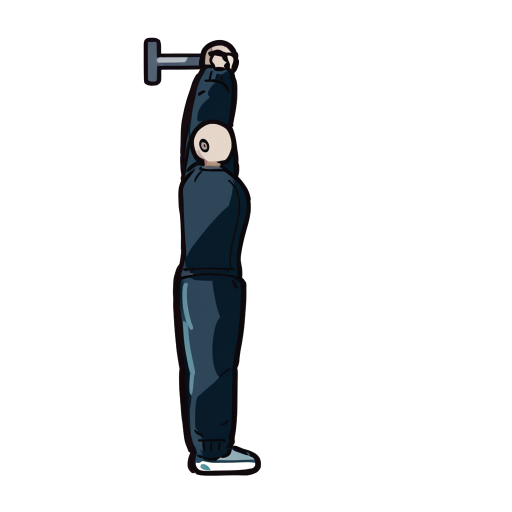
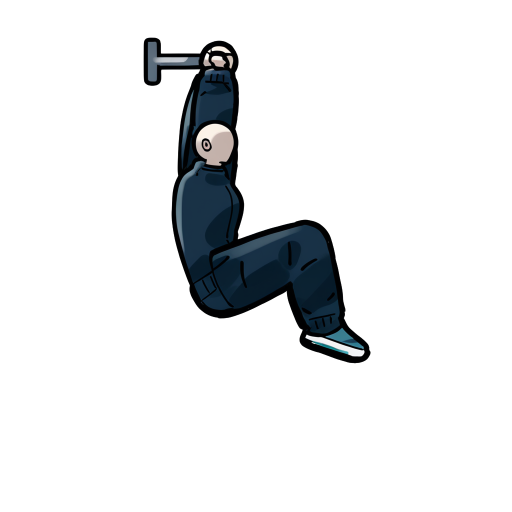
- EquipmentBodyweight
- PatternCore
- Reps6 to 20 reps
- Joint loadShoulder
How to do the Hanging Knee Raise
Set up. Hang from a pull-up bar with straight arms.
- Lift your knees toward your chest.
- Curl the pelvis up slightly at the top.
- Lower slowly without swinging.
Form cues
- Keep the body still.
- Breathe out as you lift.
- Control the lowering.
Common mistakes
- Swinging.
- Dropping the legs quickly.
Muscles worked
Main target: Abs. The rectus abdominis runs down the front of the trunk. It curls the trunk forward and, more often in training, stops the spine arching under a load.
On the way: Obliques and Forearms.
Its other side: Lower back, in the trunk pattern.
What to pair it with
Movements that round out a workout with the Hanging Knee Raise, from the same catalog the StatBlockFit app logs.
- Back Extension Superset partner: it trains the other side of the trunk pattern, so the two can alternate.
- Russian Twist Often left out: it trains the obliques, a job the moves above leave undone.
A complete workout around it
4 movements, the Hanging Knee Raise first, at the catalog's rep ranges. Load it into the workout builder to change the sets, reps and weights, then bookmark it or download it.
- Hanging Knee Raise 3 × 6 to 20 reps
- Back Extension 3 × 10 to 20 reps
- Russian Twist 3 × 12 to 30 reps
- Crunch 3 × 10 to 30 reps
Alternatives and swaps
The same main muscle with other equipment: a swap never changes the muscle a workout trains.
Gym or cable swap
Captain’s Chair Knee Raise
Machine
Less load on the shoulder
Reverse Crunch
The Hanging Knee Raise loads the shoulder by the catalog's joint rule, the one the app's workaround mode uses; this one does not.
A swap describes the movement, not your body: if a joint hurts, ask a professional before you train it.
Variations and preparation
A variation of: Hanging Leg Raise.
Other variations of the Hanging Leg Raise: Reverse Crunch and Captain’s Chair Knee Raise.
Do before it: Dead Hang (same movement, lighter), Dead Bug (bracing), Hollow Hold (same movement, lighter) and Hanging Knee Raise (same movement, lighter).
Track it in StatBlockFit
In the StatBlockFit app the Hanging Knee Raise is logged set by set: the app suggests your next weight after each session, times your rests, keeps your records and shows the 72-hour recovery of every muscle on its training map. The training guide explains how.
Questions
How do you do the Hanging Knee Raise?
Set up: Hang from a pull-up bar with straight arms. Steps: 1. Lift your knees toward your chest. 2. Curl the pelvis up slightly at the top. 3. Lower slowly without swinging. Form cues: Keep the body still. Breathe out as you lift. Control the lowering. Common mistakes: Swinging. Dropping the legs quickly.
What muscles does the Hanging Knee Raise work?
It trains the abs as its main target and works the obliques and forearms on the way.
What can I do instead of the Hanging Knee Raise?
In a gym: Captain’s Chair Knee Raise. With less load on the shoulder: Reverse Crunch. Each trains the same main muscle.
What should I pair the Hanging Knee Raise with?
Good partners in the same workout are Back Extension and Russian Twist.