3 days a week, full body
Every session trains the whole body. When a movement passes the top of its range, move to its harder version: a push-up to an archer push-up, a split squat to a skater squat.
Built for the chest, quads and glutes: within or close to 10 to 20 sets a week each.
One tab in the builder for each day. It asks before it replaces anything already there.
Weekly sets per muscle
| Muscle | Sets a week | Days trained | Against the guideline |
|---|---|---|---|
| Glutes | 14 | 3 | Within |
| Abs | 12.5 | 3 | Within |
| Chest | 11.5 | 3 | Within |
| Quads | 11.5 | 3 | Within |
| Triceps | 9.5 | 2 | Under |
| Rear delts | 9 | 3 | Under |
| Adductors | 6.5 | 2 | Under |
| Front delts | 6 | 2 | Under |
| Obliques | 6 | 1 | Under |
| Upper back | 4.5 | 0 | Under |
| Hamstrings | 4.5 | 0 | Under |
| Traps | 4.5 | 0 | Under |
| Lower back | 1.5 | 0 | Under |
| Side delts | 1.5 | 0 | Under |
A set counts as one for its main muscle and half for each muscle it works on the way, as the app counts it, and a day trains a muscle when it gives it at least 2 sets. Against a common guideline of 10 to 20 hard sets per muscle a week: a guideline, never a target.
The days
Full body A
6 movements, 20 sets
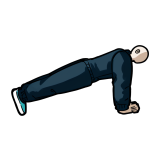 Push-Up4 × 8 to 20 reps · 2 reps in reserve
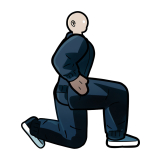 Split Squat4 × 8 to 15 reps · 2 reps in reserve
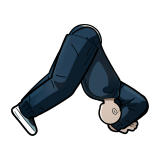 Pike Push-Up3 × 6 to 12 reps · 2 reps in reserve
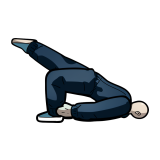 Single-Leg Glute Bridge3 × 10 to 15 reps · 2 reps in reserve
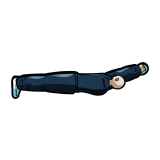 Prone Y-Raise3 × 10 to 15 reps · 1 rep in reserve
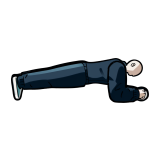 Plank3 × 30 to 60 s
Full body B
6 movements, 18 sets
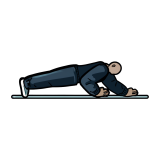 Archer Push-Up3 × 5 to 10 reps · 2 reps in reserve
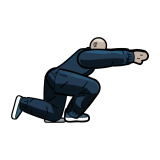 Skater Squat3 × 6 to 12 reps · 2 reps in reserve
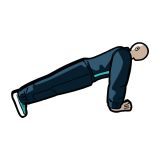 Diamond Push-Up3 × 8 to 15 reps · 2 reps in reserve
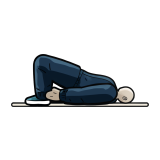 Frog Pump3 × 15 to 25 reps · 1 rep in reserve
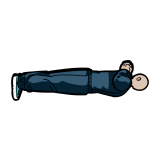 Prone T-Raise3 × 10 to 15 reps · 1 rep in reserve
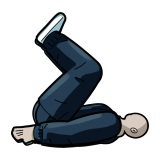 Reverse Crunch3 × 10 to 20 reps · 1 rep in reserve
Full body C
6 movements, 18 sets
- Push-Up3 × 10 to 25 reps · 2 reps in reserve
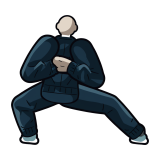 Cossack Squat3 × 6 to 12 reps · 2 reps in reserve
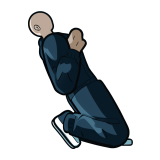 Reverse Nordic Curl3 × 5 to 10 reps · 2 reps in reserve
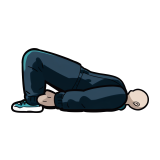 Glute Bridge3 × 15 to 25 reps · 1 rep in reserve
- Prone Y-Raise3 × 10 to 15 reps · 1 rep in reserve
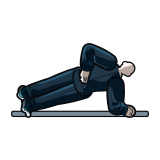 Side Plank3 × 30 to 45 s
How to use it
Start each movement at a weight you can lift for the bottom of its rep range with the reps in reserve shown. When every set reaches the top of the range at that effort, add the smallest weight step next time and work back up from the bottom of the range. Treat it as a common starting point, not a prescription: change the movements to the ones your gym and your body suit.
Rest two to three minutes between sets of the big compound lifts and one to two between the rest. Sleep and rest days are part of the plan: a session that trains the same muscles as yesterday's is not one this split asks for.
A hold is written in seconds: add time before you add a harder version.
Questions
Can you get stronger with no equipment?
While the reps stay in a working range, yes. When a movement passes the top of its range, move to its harder version: a push-up to an archer push-up, a split squat to a skater squat.
How do I train my back with no equipment?
With nothing at all, the prone Y and T raises train the upper back and the rear delts, but nothing pulls the lats through a full range. A doorframe pull-up bar or a band is the first thing worth adding, and the dumbbell home split adds rows.
Why are some muscles under the guideline?
Counted as the app counts them, the chest, the quads and the glutes get 11.5 to 14 sets a week. The back, the hamstrings and the calves get fewer, because a movement that needs nothing loads them little.